
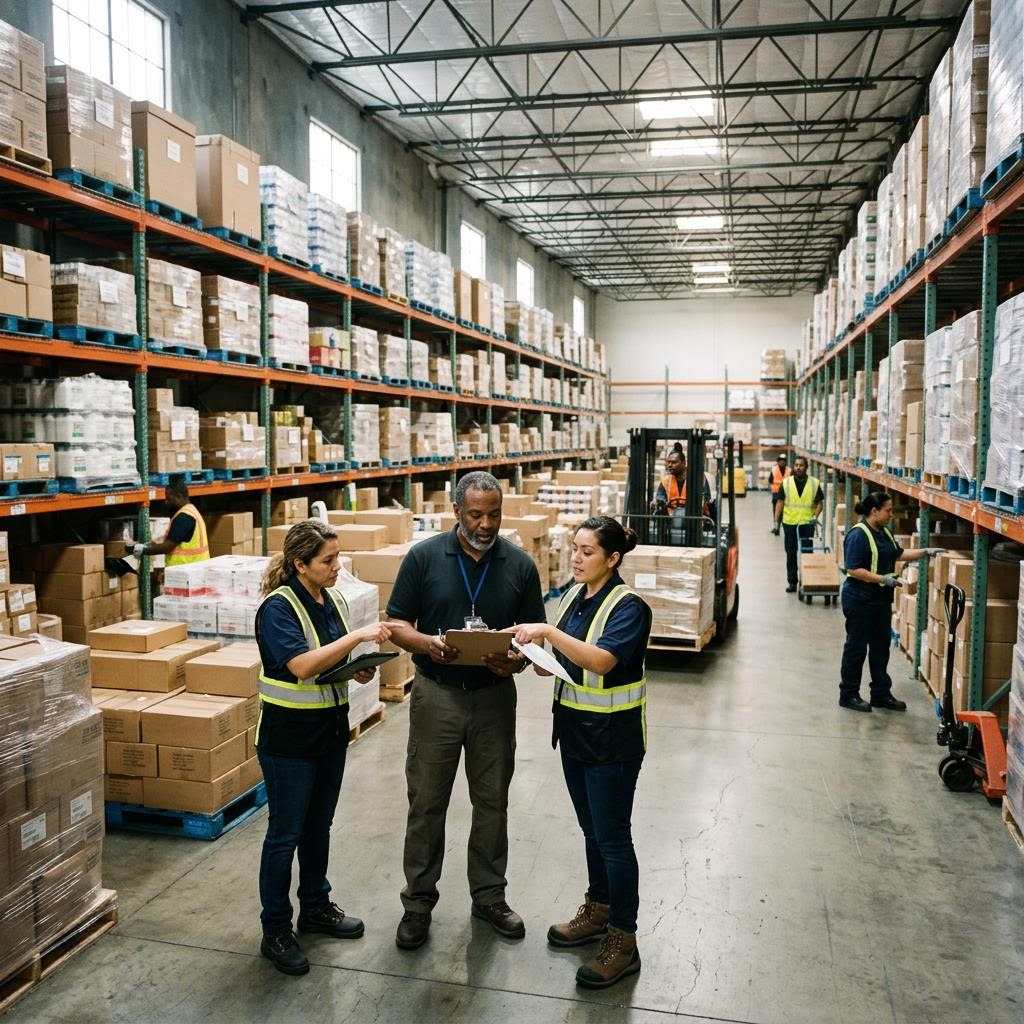
The wholesale and distribution sector is a critical engine of the broader economy, serving as the necessary link between manufacturers and retail storefronts. For wholesale distributors operating in Newark, California, the logistical demands of moving massive quantities of physical goods are immense. However, the logistical challenges are frequently overshadowed by the financial complexities of the industry.
At its core, the distribution business is a balancing act of timing. The primary financial challenge is the structural gap between the time capital leaves the business to secure inventory and the time revenue returns when clients finally pay their invoices. Managing this cash flow chasm requires precision, discipline, and, almost always, access to strategic external capital. Working capital loans and revolving lines of credit are the specialized financial tools that allow Newark, California distributors to scale their operations without collapsing under the weight of their own growth.
Wholesale-Specific Capital Pressures in Newark
Distributors in Newark operate in a highly competitive, B2B (business-to-business) environment. Unlike retail businesses that receive immediate payment at the point of sale, wholesalers must extend credit terms to their customers to remain competitive. It is industry standard to offer Net-30, Net-60, or even Net-90 payment terms to large retailers or institutional buyers.
Simultaneously, the wholesaler’s own suppliers—whether domestic manufacturers or overseas factories—often demand payment upfront or on very tight terms. This creates a severe liquidity trap. A Newark distributor might write a $100,000 check in September to secure holiday inventory, ship that inventory to retailers in October, and not receive payment until late December or January. During those months, the distributor must still pay commercial rent on their Newark warehouse, cover fleet maintenance, and meet weekly payroll.
Without a capital buffer, a distributor is forced to turn down new, lucrative purchase orders simply because they lack the cash to buy the initial goods. In the wholesale industry, a lack of working capital directly caps revenue potential.
How Working Capital Loans Generally Work
Working capital loans are designed specifically to bridge short-term timing gaps. Unlike a 10-year commercial real estate loan used to buy a warehouse, working capital financing is shorter in duration and highly liquid. For a wholesale distributor, the most effective structure is typically a revolving line of credit.
A revolving line functions much like a massive commercial credit card. The lender underwrites the business and approves a maximum credit limit. The distributor can draw cash from the line exactly when needed—for example, to pay an overseas supplier—and is charged interest only on the actively drawn balance. When the retailer eventually pays the distributor's invoice, the distributor uses those funds to pay the line of credit back down to zero. The credit immediately becomes available to draw again for the next order.
Some distributors also utilize a specialized form of working capital known as Accounts Receivable (A/R) Financing or Factoring. In this model, the lender advances a percentage (a portion) of the value of the distributor's outstanding invoices immediately, providing instant liquidity, and collects a fee when the invoice is finally paid.
Common Uses of Funds in Distribution
In the Newark, California wholesale sector, working capital is the fuel for scaling the business. It is primarily deployed to manage the cash flow cycle and seize volume-based opportunities.
Because margins in wholesale are often thin, the ability to negotiate bulk discounts with suppliers is critical. A working capital line allows a distributor to leverage their purchasing power, buying in larger quantities to drive down the per-unit cost, knowing they have the financial runway to hold the inventory until it is sold.
- Bridging the gap between supplier payment terms and client invoice realization.
- Taking advantage of volume or early-payment discounts from manufacturers.
- Ramping up inventory levels ahead of known seasonal spikes in demand.
- Covering fixed overhead—such as warehouse lease payments and payroll—during the waiting period for large corporate invoices to clear.
A Newark, California Wholesale Scenario
Consider a hypothetical scenario involving an established wholesale restaurant supplier operating out of a warehouse in Newark, California. The distributor has built a solid business supplying non-perishable goods and packaging to local East Bay restaurants. The business is profitable, but cash is perpetually tight because restaurants notoriously take 45 to 60 days to pay their invoices.
The distributor is approached by a rapidly expanding regional restaurant group that wants to place a massive, recurring monthly order. Winning this contract would increase the distributor's overall revenue by 30%. However, the manufacturer requires an upfront payment of $75,000 for the initial inventory, and the distributor does not have that cash liquid. If they decline the order, they lose a transformative growth opportunity.
Suppose the distributor utilizes an established revolving line of credit to pay the manufacturer. After the goods are delivered, the restaurant group may take weeks to pay the invoice. During that period, the distributor pays interest on the drawn amount. If the restaurant group’s payment arrives as planned, the distributor can pay down the line of credit and retain the profit. The working capital line acted as the bridge, allowing the Newark business to scale without diluting equity or draining operating cash. (Note: This is an illustrative example meant to explain the mechanics of a working capital line. Actual credit limits and terms depend on lender underwriting.)
Qualification and Documentation Preparation
Securing a commercial line of credit requires demonstrating that the business generates reliable, verifiable revenue and operates with disciplined financial controls. Lenders want to see that the business is actively turning over its inventory and collecting its receivables efficiently.
Newark distributors must prepare a pristine financial package. This includes current Accounts Receivable and Accounts Payable aging reports, which prove the speed of the cash cycle. Lenders will closely scrutinize the A/R report; if a large percentage of clients are paying beyond 90 days, the lender will view the business as high risk. Up-to-date Profit and Loss statements, a current Balance Sheet, and business tax returns are also standard requirements.
Tradeoffs and Alternatives
The primary advantage of a revolving line of credit is its flexibility. However, because working capital lines are often unsecured (not backed by hard assets like real estate), the interest rates are generally higher than long-term commercial mortgages. Furthermore, these are variable-rate products tied to the prime rate, meaning the cost of borrowing can fluctuate with the broader economy.
A significant tradeoff involves financial discipline. The ease of drawing on a line of credit can tempt owners into using short-term funds for long-term investments, such as buying a new delivery truck or renovating the warehouse. Using a short-term line for a long-term asset is a dangerous mismatch of capital that can quickly lead to a severe cash crunch.
If a business cannot qualify for a traditional line of credit, Accounts Receivable factoring is a common alternative. While factoring provides immediate liquidity without requiring strong personal credit, the fees are significantly higher, which can erode the distributor's already thin profit margins.
Comparison Questions and Responsible Next Steps
When evaluating working capital options, Newark distributors should scrutinize the terms and mechanics of the loan. Ask the lender: What is the exact interest rate structure, and what index is it tied to? Is there an annual 'clean-up' provision requiring the balance to hit zero for 30 consecutive days each year? Are there maintenance fees or non-use fees associated with the line of credit?
By approaching working capital strategically—using it to bridge timing gaps and capture volume discounts rather than mask unprofitability—wholesale distributors in Newark, California can build highly resilient, scalable supply chain operations.