
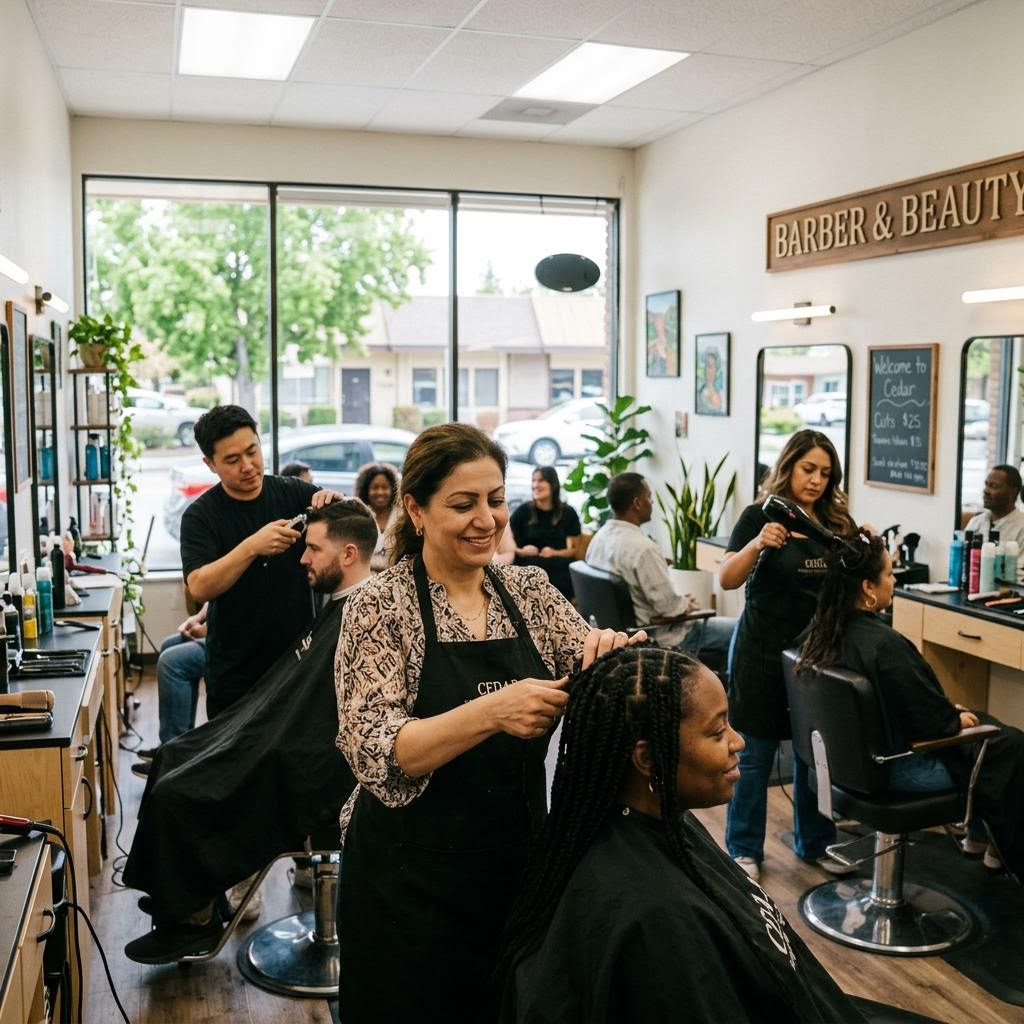
Considering the Cedar Boulevard Area in Newark, California, for a personal service business requires analyzing the local environment for long-term viability. Salons, fitness studios, spas, and personal care clinics must determine if a specific site will help them offer high-touch experiences to a local clientele. However, the financial architecture of a personal service business is distinctly different from retail or manufacturing. Your product is an experience, delivered by skilled professionals in a highly curated physical environment.
Building and maintaining that environment, while keeping top talent satisfied and managing the natural ebb and flow of client appointments, requires capital. Whether you are funding the initial build-out of a boutique fitness studio, upgrading salon chairs and ventilation, or bridging the gap during a seasonal slow period, securing the right type of business loan is critical to ensuring your service remains uninterrupted and exceptional.
The Cedar Boulevard Service Economy
When evaluating a site in the Cedar Boulevard Area, it is important to verify its proximity to residential neighborhoods or accessible retail centers. Is the location genuinely well-suited and zoned for a business model that relies on recurring appointments and local loyalty? The businesses that succeed must excel at client retention. Financially, this translates to a business model built on the lifetime value of a customer rather than one-off transactions.
However, achieving that high lifetime value requires significant upfront investment. Clients expect modern, clean, and aesthetically pleasing environments. For a salon, this means specialized plumbing, high-end lighting, and premium seating. For a fitness center, it means specialized flooring, acoustic treatments, and heavy-duty equipment. These facility requirements represent high fixed costs that must be paid long before the first client walks through the door.
When entering a funding discussion, it is important to communicate that your capital request is an investment in the client experience, which directly drives the recurring revenue model. Lenders need to understand that in personal services, the ambiance and the equipment are not just overhead; they are the primary engines of client acquisition and retention.
Financing Storefront and Studio Build-Outs
The most significant financial hurdle for many personal service businesses is the initial build-out or major renovation of a commercial space. A standard retail space in the Cedar Boulevard Area cannot easily become a hair salon or a hot yoga studio without extensive tenant improvements (TI).
While landlords may offer a TI allowance, it rarely covers the full scope of a specialized build-out. Term loans or SBA 7(a) loans are the standard vehicles for funding these major improvements. By amortizing the cost of the build-out over five to ten years, you align the debt service with the long-term revenue generated by the improved space.
It is crucial to work closely with experienced contractors to build a highly accurate budget before securing the loan. Underestimating the cost of specialized plumbing or HVAC requirements can leave a project stalled halfway through, causing severe financial strain.
Upgrading Salon and Fitness Equipment
Beyond the physical space, personal service businesses rely on specialized equipment. Laser therapy machines, premium Pilates reformers, or high-end styling stations are expensive, but they allow the business to charge premium rates and attract a higher tier of clientele.
Equipment financing is uniquely suited for these purchases. In this structure, the equipment itself serves as collateral, which often makes approval easier and preserves your general working capital for payroll and marketing.
- Calculate the specific ROI of the equipment: how many sessions or treatments are required monthly to cover the debt service?
- Consider leasing options for technology that evolves rapidly, such as aesthetic medical devices.
- Ensure the loan term does not exceed the expected useful life of the equipment.
Managing Payroll and Operational Cash Flow
In the personal service industry, your staff is your most valuable asset. Retaining talented stylists, trainers, or therapists is essential, which means payroll must be met without fail, regardless of minor fluctuations in weekly bookings. Additionally, the classification of staff—whether they are W-2 employees or 1099 independent contractors—heavily influences your cash flow dynamics.
A revolving line of credit provides a vital safety net for managing these operational costs. It allows the business to cover payroll during a slower month or invest heavily in a seasonal marketing campaign, paying down the balance as revenue stabilizes. A line of credit should be used to smooth out cash flow, not to permanently float a business model with fundamentally broken margins.
Funding Marketing and Client Acquisition
Growing a personal service business in Newark requires consistent marketing. Whether it is a targeted digital ad campaign, community sponsorships, or a re-branding effort, acquiring new clients requires upfront capital.
While a term loan is too rigid for a marketing campaign, a working capital loan or drawing on a line of credit is an appropriate use of funds—provided you have a clear metric for tracking the cost of customer acquisition (CAC). If you know that spending $1,000 on local marketing yields twenty new recurring clients, utilizing short-term debt to fund that marketing becomes a highly calculated growth strategy rather than an expense.
Organizing Your Financial Narrative
Personal service businesses can sometimes struggle in funding conversations if they appear to be run more like a lifestyle hobby than a rigorous enterprise. To secure favorable terms, you must present a highly organized, professional financial package.
Lenders will closely examine your profit and loss statements, balance sheets, and tax returns. More importantly, be prepared to discuss your operational metrics. What is your client retention rate? What is the average ticket size? What is your utilization rate (e.g., how many of your salon chairs are booked on a given Tuesday)?
A clear, quantified 'Use of Funds' document is essential. Vaguely requesting capital for 'growth' is rarely effective. Specifying that you need $40,000 to add two aesthetic treatment rooms, which will generate an estimated $8,000 in new monthly revenue, builds tremendous credibility.
Cultivating a Resilient Practice
For personal service businesses in the Cedar Boulevard Area, the strategic use of capital is what separates a struggling studio from a thriving, resilient brand. The goal is to match the financial tool to the specific need—using term loans for build-outs, equipment financing for physical assets, and a line of credit for operational flexibility.
By maintaining clear financials and approaching debt as a calculated investment in the client experience, you can build a sustainable, profitable service business that acts as a cornerstone of the Newark community.