
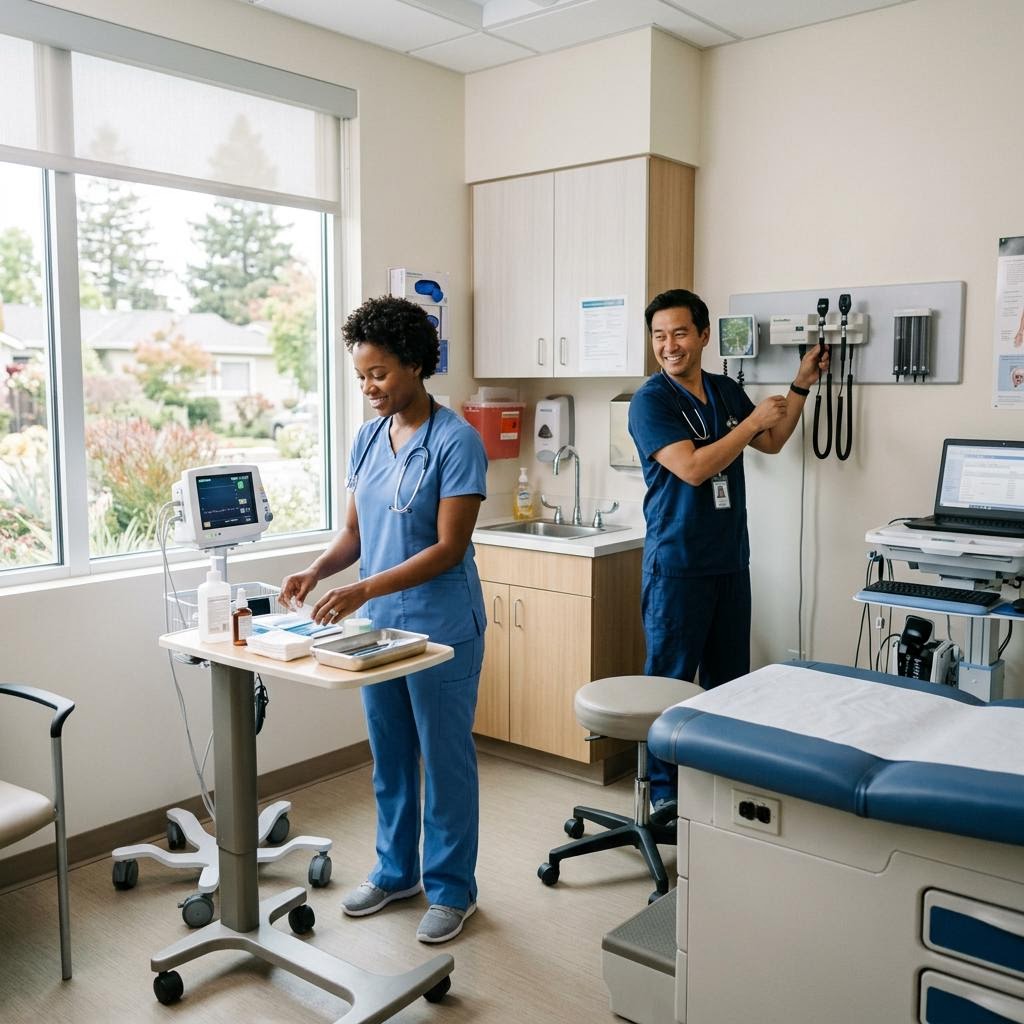
Operating a medical or dental practice in the Silliman Area of Newark, California, requires balancing exceptional patient care with the rigorous demands of healthcare administration. The cost of running a modern clinic is significant, encompassing everything from advanced diagnostic equipment and specialized staffing to compliance, insurance delays, and facility upkeep.
Whether you are acquiring an existing practice, expanding your current clinic footprint, or simply managing the structural gap between providing care and receiving insurance reimbursements, capital is a constant consideration. Understanding the specific funding avenues available to healthcare providers in this part of Newark is the first step toward building a financially resilient practice.
The Silliman Area Healthcare Environment
When evaluating the Silliman Area of Newark for a medical facility, providers must investigate the specific mix of nearby residential neighborhoods and available commercial properties. For a medical practice, establishing proximity to local families, schools, and individuals seeking reliable healthcare is often a primary goal. You must verify whether the physical accessibility and zoning of your chosen site truly make it an attractive, compliant location for family practices, specialized clinics, or wellness centers.
However, commercial real estate in desirable parts of Newark requires capital, and modifying a space to meet HIPAA and healthcare compliance standards adds another layer of cost. A standard office build-out is vastly different from a clinical build-out involving specialized plumbing, reinforced floors for heavy imaging machines, and patient privacy considerations.
When approaching capital discussions, it is helpful to frame your request within the context of the Silliman Area's demographics and your specific patient volume. A clinic that serves a growing number of local families has a different revenue trajectory than a highly specialized procedural practice.
Bridging the Insurance Reimbursement Gap
One of the most persistent financial challenges for medical practices is the delay between delivering care and receiving payment. Insurance reimbursement cycles can stretch from weeks to months, while payroll, rent, and supply costs remain strictly on a monthly schedule. This structural cash flow gap requires careful management.
Working capital loans and specialized medical factoring are common tools used to smooth out these delays. A revolving line of credit can provide the liquidity needed to meet immediate obligations while waiting for receivables to clear. This allows the practice to operate smoothly without forcing the owners to inject personal capital during slower reimbursement cycles.
The goal is to use working capital defensively—as a buffer against predictable delays—rather than as a permanent crutch for an unprofitable billing operation. Ensuring your billing department is efficient is just as important as securing the right line of credit.
Financing Diagnostic and Clinical Equipment
Medical technology evolves rapidly, and maintaining a state-of-the-art practice often means continuous investment in new equipment. From digital x-ray machines and dental chairs to advanced sterilization units and electronic health record (EHR) servers, these assets represent significant capital expenditures.
Equipment financing is tailored exactly for these scenarios. Because the equipment itself holds substantial value, lenders often use it as collateral, which can result in more favorable rates and terms compared to unsecured borrowing.
- Evaluate the useful life of the medical equipment against the term of the loan.
- Consider equipment leasing options if the technology is likely to become obsolete within three to five years.
- Factor in the cost of installation, training, and maintenance contracts when calculating the total funding required.
Practice Acquisition and Partner Buyouts
Many medical practices in the Silliman Area grow through acquisition. A younger doctor might buy out a retiring practitioner, or a successful clinic might merge with a complementary specialty. These transactions require substantial capital and a thorough valuation of the practice's assets, patient list, and goodwill.
Term loans and SBA 7(a) loans are frequently utilized for practice acquisitions. These structures provide the lump sum necessary to execute the purchase, with repayment terms spread over seven to ten years. Lenders typically look for a smooth transition plan, ensuring that the patient base will remain loyal to the new ownership.
If you are planning an acquisition or a partner buyout, start the conversation early. The valuation process and the legal structuring of the buyout can take months, and having a clear understanding of your borrowing capacity dictates how you negotiate the deal.
Commercial Real Estate and Facility Expansion
Leasing a clinical space offers flexibility, but purchasing the property provides long-term stability and builds equity. For established practices in the Silliman Area, transitioning from a tenant to a property owner is a major financial milestone.
Commercial real estate loans and SBA 504 loans are the primary vehicles for this transition. The SBA 504 program is particularly attractive because it offers long-term, fixed-rate financing with a lower down payment requirement, specifically for major fixed assets like real estate.
- Assess whether the practice's historical cash flow can comfortably support a commercial mortgage.
- Understand that environmental assessments and healthcare-specific zoning appraisals will be required.
- Plan for the downtime or disruption that may occur if the new property requires a significant clinical build-out.
Preparing for the Funding Conversation
Medical practices are generally viewed favorably by capital providers because they tend to have stable, recurring revenue streams. However, this does not exempt the practice from rigorous financial scrutiny. You must present a clear, organized picture of your financial health.
Gather your historical financial statements, tax returns, and a detailed breakdown of your accounts receivable aging. Lenders will want to see how efficiently you collect on billings and what percentage of your receivables are past 90 days. A high volume of uncollectible debt will be a red flag.
Furthermore, be prepared to discuss the operational side of the practice. How are you attracting new patients from the Silliman Area? What is your retention rate? A strong narrative supported by clean data is the most effective tool in any funding negotiation.
A Measured Approach to Practice Growth
Taking on debt to grow a medical practice is a serious commitment that requires a measured, analytical approach. The objective is not simply to secure capital, but to secure capital that acts as a lever for improved patient care and increased profitability.
By clearly identifying your needs—whether it is bridging an insurance gap, buying a new imaging machine, or purchasing your clinic building—you can seek the specific loan product designed for that purpose. This precision prevents over-leveraging and ensures the practice remains financially healthy.
For medical professionals in the Silliman Area of Newark, the right funding strategy provides the breathing room necessary to focus on what matters most: the health and well-being of the patients you serve.