
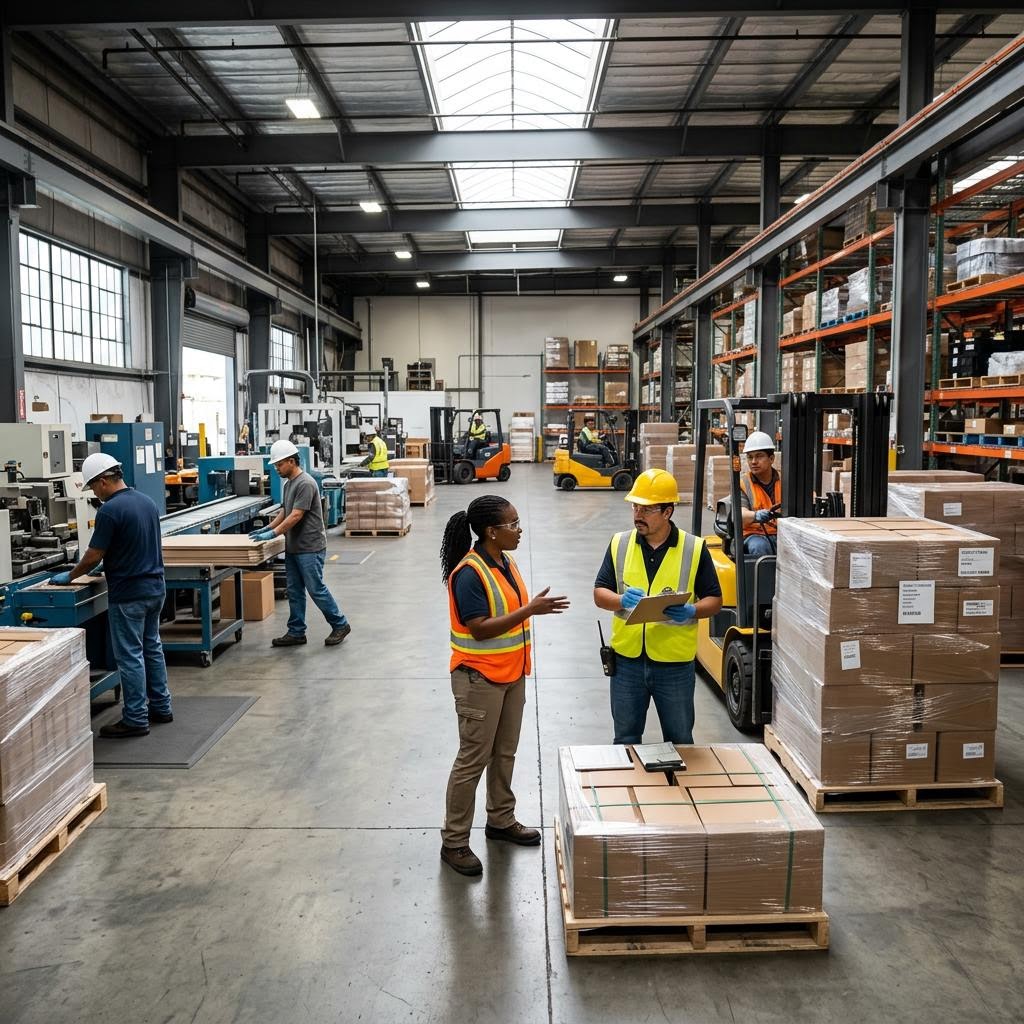
When planning an operation in the Dumbarton area of Newark, California, manufacturers and distributors must evaluate whether the local infrastructure can support broad Bay Area logistics. Business owners must verify local zoning carefully: does the chosen site actually allow for the expansive warehousing, manufacturing facilities, or heavy commercial use required for scale? For industrial fabricators exploring options here, the financial stakes are massive. The capital required to run an industrial business dwarfs the needs of standard retail or service businesses.
Industrial operators deal in heavy machinery, vast raw material inventories, and complex B2B payment cycles. Securing funding in this environment is not simply about bridging a minor cash flow gap; it is about financing the core infrastructure of the business. Whether you are automating a production line, purchasing a larger facility to handle increased distribution volume, or managing a heavily delayed accounts receivable ledger, the capital structure you choose will dictate your capacity to scale.
The Dumbarton Industrial Environment
Evaluating a site's actual proximity to major transit routes and the Dumbarton Bridge is an essential step to determine if a specific property is highly strategic for moving physical goods efficiently. Furthermore, maintaining a compliant industrial footprint anywhere in Newark requires significant capital. Commercial leases for large-scale warehouses are substantial, and the utility and compliance costs associated with manufacturing are high.
The businesses that thrive here operate on tight logistical margins. An inefficient production line or a poorly managed inventory system can rapidly consume profitability. Capital must be deployed specifically to enhance operational throughput. If an investment does not increase the speed of production, reduce the cost of goods sold, or expand storage capacity, its value must be questioned.
When entering a funding discussion, it is imperative to speak the language of industrial efficiency. Lenders need to see that you view capital as a tool to increase your production metrics or distribution volume. A request for funding should be backed by a clear analysis of how the new machinery or facility will lower your unit costs or increase your fulfillment speed.
Financing Heavy Manufacturing Equipment
Manufacturing and distribution are fundamentally tied to the capabilities of physical assets. CNC machines, industrial presses, automated packaging lines, and fleets of specialized forklifts are not optional luxuries; they are the engines of the business. Purchasing these assets requires massive capital outlays.
Equipment financing is the standard and most logical vehicle for these purchases. In an equipment financing arrangement, the machinery itself serves as the collateral for the loan. This structure is highly beneficial because it leaves the business's general working capital intact and often results in more favorable interest rates than unsecured borrowing.
- Carefully align the financing term with the depreciation and useful life of the machinery. Financing a machine over ten years that will be obsolete in five is a dangerous misstep.
- Factor in the total cost of installation, specialized training for operators, and ongoing maintenance contracts, as these often add significantly to the base purchase price.
- Investigate whether the new equipment will require facility upgrades, such as reinforced concrete flooring or upgraded electrical panels, and bundle those costs into the financing plan if possible.
Supply Chain and Inventory Capital
For distributors and manufacturers, inventory is both the primary asset and the primary cash flow trap. You must purchase raw materials or wholesale goods in massive quantities to secure favorable pricing, but that cash remains locked up until the finished product is sold and the invoice is paid.
This dynamic creates a structural need for working capital. A robust revolving line of credit provides the liquidity to issue large purchase orders to overseas suppliers, manage the freight time, and process the goods without draining the company's operating accounts.
Some distributors also utilize inventory financing, where a revolving line is secured specifically by the value of the inventory in the Dumbarton warehouse. This requires highly organized, real-time inventory tracking systems, as the lender will frequently audit the collateral to ensure the loan-to-value ratio remains secure.
Commercial Real Estate and Warehouse Expansion
As an industrial business scales, it inevitably outgrows its physical space. Leasing a larger facility in Dumbarton is an option, but purchasing industrial real estate provides long-term stability against rent hikes and builds immense equity.
Commercial real estate (CRE) loans and SBA 504 loans are specifically designed for these massive acquisitions. The SBA 504 program is particularly advantageous for manufacturers, offering long-term, fixed-rate financing with lower down payments for owner-occupied real estate and heavy machinery.
The timeline for industrial real estate transactions is notoriously long. Environmental assessments (Phase I and Phase II ESA) are almost always required to ensure the property is free of historical contamination. Businesses must begin the financing conversation months before they intend to move.
Managing Extended B2B Payment Cycles
Unlike retail businesses that receive payment at the point of sale, manufacturers and distributors operate almost entirely on B2B terms. It is standard to offer Net-30, Net-60, or even Net-90 terms to large corporate clients. While this wins contracts, it creates a severe lag in cash flow.
Accounts receivable financing (or factoring) is a common strategy to bridge this gap. By advancing cash against the value of outstanding invoices, the business can immediately fund the next production cycle or purchase the next container of goods, rather than waiting months for a client to pay.
While factoring provides critical speed, it comes at a cost. Mature operations often work to transition from factoring to a traditional bank line of credit, which typically carries a lower cost of capital, once their balance sheet is strong enough to qualify.
Presenting a Strong Financial Case
Industrial lending involves large dollar amounts, and lenders will heavily scrutinize the business's financial health. You must present a pristine, audited financial package.
Lenders will focus intently on your inventory turnover ratios, your accounts receivable aging, and your debt service coverage ratio (DSCR). They need to see that your clients are creditworthy, your inventory is not stagnant, and your historical cash flow can comfortably support the new debt.
A detailed, quantified 'Use of Funds' statement is paramount. Clearly articulating that a $500,000 equipment loan will automate a packaging line, reducing labor costs by $15,000 a month and increasing capacity by 20%, changes the conversation from a request for money into a compelling business case.
Building Industrial Resilience
For manufacturers and distributors in the Dumbarton area, capital is the foundation of scale. The objective is to strategically match the financial tool to the specific operational challenge—using working capital lines for inventory and receivables, and long-term financing for heavy equipment and real estate.
By maintaining rigorous financial discipline and approaching borrowing as a calculated investment in operational efficiency, your industrial business can build a resilient, profitable foundation in Newark’s most critical logistical hub.