
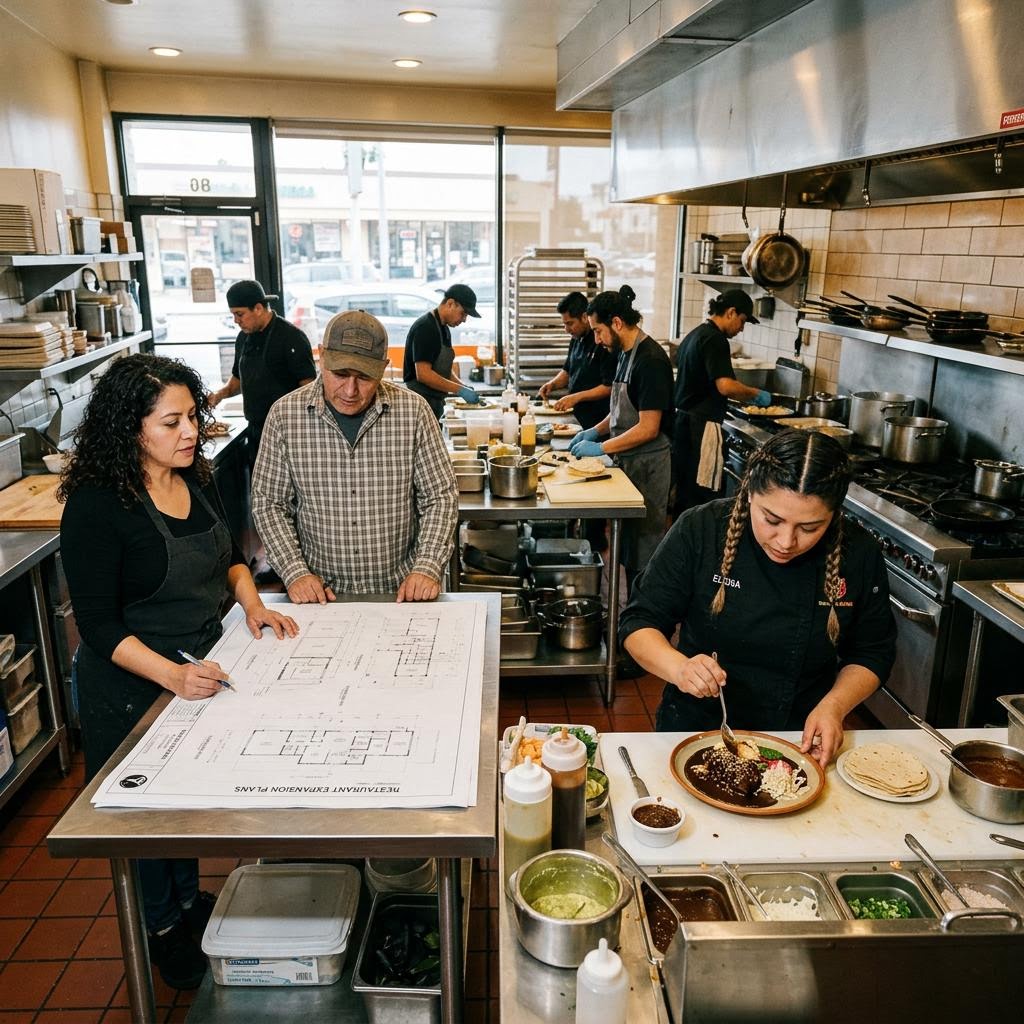
The food service industry in Newark, California, is dynamic and demanding. Whether operating a neighborhood bakery, a high-volume restaurant, or a commercial catering facility, owners face an intense operational environment. Margins are famously tight, labor and ingredient costs fluctuate unpredictably, and the physical demands on commercial kitchen equipment are relentless. Surviving the first few years in food service is an achievement; stabilizing and scaling the business requires a sophisticated approach to capital.
For established food service operators in Newark seeking to make generational moves—such as opening a second location, purchasing the building they currently lease, or undertaking a massive facility remodel—short-term capital is insufficient. These massive projects require long-term, stable financing that will not suffocate the restaurant's monthly cash flow. In these scenarios, Small Business Administration (SBA) loans are often the most powerful financial instruments available.
Food Service Capital Pressures in Newark
A primary challenge for food service businesses in Newark is the high cost of physical infrastructure. Unlike a consulting firm that can operate remotely, a restaurant requires a highly specialized, heavily permitted commercial space. Upgrading electrical panels for heavy machinery, installing commercial ventilation hoods, and meeting strict municipal health codes require significant upfront capital.
Furthermore, restaurant owners who lease their space face the constant threat of rising rent. If a Newark cafe builds a loyal local following over five years, that success can be entirely erased if the landlord doubles the rent upon lease renewal. Transitioning from leasing to owning the physical property is one of the most effective ways to stabilize fixed costs in the food service industry. However, commercial real estate loans typically require massive down payments (a substantial percentage), which can drain a restaurant's operating liquidity. This specific capital barrier is precisely what SBA programs are designed to lower.
How SBA Loans Generally Work
It is crucial to understand that the Small Business Administration does not directly lend money to restaurants. Instead, the SBA partners with approved commercial lenders, banks, and credit unions, providing a government-backed guarantee on a portion of the loan. This guarantee significantly reduces the risk for the lender.
Because their risk is mitigated, lenders are willing to extend capital to small businesses under terms that are far more favorable than conventional commercial loans. For food service businesses, the two most relevant programs are the SBA 7(a) and the SBA 504. The 7(a) program is highly versatile, often used for working capital, equipment, and business acquisitions, with over an extended term. The 504 program is specifically engineered for major fixed assets—primarily purchasing owner-occupied commercial real estate or heavy, long-life machinery—and offers extended repayment terms and potentially lower down payments.
This structure—longer repayment terms and lower down payments—results in a lower monthly debt service. This is critical for restaurants, as it leaves more cash in the operating account to manage payroll, inventory, and seasonal fluctuations.
Common Uses of Funds in Food Service
SBA loans are not designed for quick cash flow fixes; they are strategic tools for structural growth and stability. In the Newark food service sector, SBA loans are typically deployed for major, transformative projects.
- Purchasing owner-occupied commercial real estate to escape rising lease payments.
- Funding a massive, full-scale build-out of a new restaurant location, including all tenant improvements and commercial kitchen installations.
- Acquiring an existing, competing restaurant or catering business in the Newark area.
- Refinancing existing, high-interest short-term debt to improve monthly cash flow.
A Newark, California Food Service Scenario
Consider a hypothetical scenario involving an established, highly successful independent restaurant in Newark, California. The restaurant has leased its current location for eight years, building a strong reputation and consistent profitability. The owners learn that their landlord plans to sell the building. If a new investor purchases the property, the restaurant faces the risk of a massive rent increase or eviction at the end of their lease.
The owners decide to purchase the building themselves to secure their business's future. The purchase price is $1.5 million. A conventional commercial loan would require a $300,000 to $450,000 down payment, which would severely deplete the restaurant's cash reserves. Instead, they apply for an SBA 504 loan through a local Certified Development Company (CDC) and a partner bank.
Depending on the lender and program guidelines, the owners might inject a smaller down payment than conventional loans require. The bank covers a portion of the project, and a CDC covers another portion with a long-term fixed rate. The restaurant successfully purchases the building. Their monthly mortgage payment is comparable to their previous rent, but they are now building equity in Newark commercial real estate and have permanently eliminated the threat of eviction. (Note: This is an illustrative example meant to explain SBA 504 mechanics. Actual eligibility, approval, down payments, and rates depend entirely on lender underwriting and SBA guidelines.)
Qualification and Documentation Preparation
The primary tradeoff of an SBA loan is the intense, rigorous application process. The government guarantee requires lenders to follow strict compliance checklists. Missing documents will stall the process, which can take a considerable amount of time for real estate transactions.
Food service owners must provide a flawless financial package. This includes three years of complete business and personal tax returns, current Profit and Loss statements, a current Balance Sheet, and a detailed business plan. Lenders will closely analyze the restaurant's historical profitability to ensure it generates enough cash flow to comfortably service the new debt.
Tradeoffs and Alternatives
While the financial terms are highly favorable, SBA loans are not suitable for emergencies. If a Newark restaurant needs capital in two weeks to replace a failed walk-in freezer, the SBA process is too slow. Additionally, SBA loans generally require an unconditional personal guarantee from any owner holding 20% or more equity, meaning personal assets are at risk if the business fails.
If speed is the primary factor, restaurants often seek conventional equipment financing or, in extreme emergencies, merchant cash advances, though the cost of capital in those alternative structures is significantly higher.
Comparison Questions and Responsible Next Steps
When exploring SBA options, Newark food service owners should ask prospective lenders direct questions: Are you an SBA Preferred Lender Program (PLP) participant with the authority to make final credit decisions? What is your typical timeline to closing for restaurant real estate transactions? Will there be a collateral shortfall that requires a lien on my personal residence?
By preparing meticulously and understanding the timeline, Newark, California food service operators can leverage SBA financing to secure their physical locations, expand their footprints, and build lasting, generational culinary businesses.