
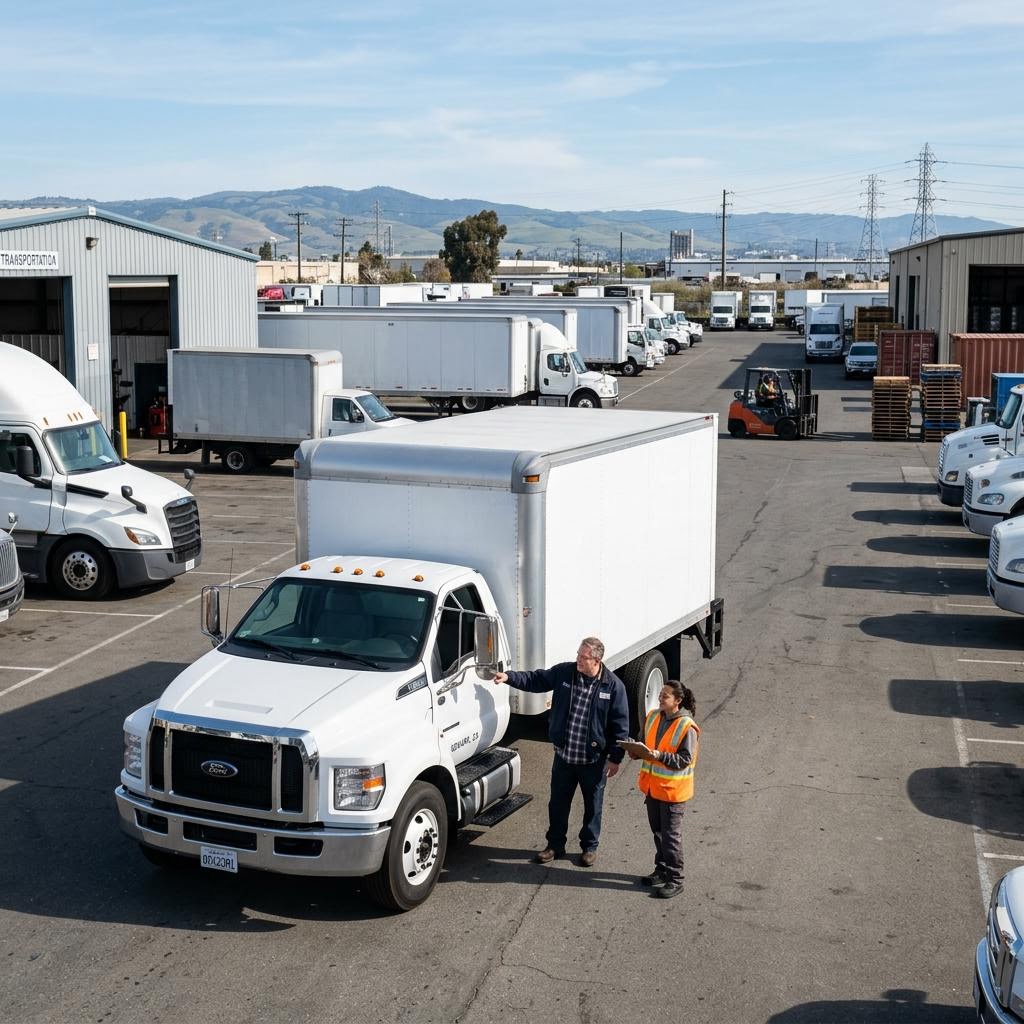
The transportation and logistics industry is the physical backbone of commerce, and When evaluating Newark, California as an operational base, fleets consider its position within the broader Bay Area supply chain. For local trucking companies, last-mile delivery fleets, and specialized freight haulers, the ability to move goods efficiently dictates survival. However, the transportation sector is overwhelmingly asset-dependent. A logistics company’s ability to generate revenue is strictly capped by the size, reliability, and regulatory compliance of its vehicle fleet.
Acquiring commercial vehicles—whether heavy-duty Class 8 tractors, specialized refrigerated trailers, or a fleet of delivery step-vans—requires massive capital investment. Paying cash for these assets is rarely feasible and severely depletes the working capital needed for fuel, insurance, and payroll. To scale operations, replace aging rigs, or meet stringent California environmental regulations, transportation companies in Newark rely heavily on equipment financing. This specialized form of commercial borrowing allows fleets to acquire revenue-generating assets while spreading the cost over the useful life of the vehicle.
Transportation-Specific Capital Pressures in Newark
Operating a transportation company in California introduces capital pressures that fleets in other states may not face. Chief among these is strict adherence to the California Air Resources Board (CARB) emissions regulations. Older diesel engines must frequently be retrofitted or retired entirely, forcing companies to purchase newer, compliant vehicles simply to remain legally operational. This regulatory environment accelerates the capital expenditure cycle for Newark fleets.
Simultaneously, the industry is plagued by delayed cash flow. It is standard for shippers and freight brokers to operate on Net-30 or Net-60 payment terms. While the transportation company waits weeks to be paid for a delivered load, they must continuously fund diesel fuel, driver payroll, and heavy commercial insurance premiums. This structural cash flow gap means that fleet owners must fiercely protect their liquid working capital. Using cash reserves to buy a truck outright leaves the business dangerously exposed to minor disruptions, such as a spike in fuel prices or a delayed corporate invoice.
How Commercial Vehicle Equipment Financing Works
Equipment financing is uniquely tailored for asset-heavy industries. In this arrangement, a commercial lender or specialized fleet finance company provides the capital to purchase the vehicle, and the vehicle itself serves as the primary collateral for the loan. Because the lender holds a secured lien on a tangible, resalable asset (the truck or trailer), the risk profile is lower than extending an unsecured business loan.
This inherent security typically results in more accessible approval criteria, manageable down payment requirements (often depending on underwriting criteria), and competitive fixed interest rates. The transportation company repays the principal and interest over a set term, over a set timeframe, depending on the age and type of the vehicle.
This structure creates a direct alignment between the debt and the revenue. As the new truck is deployed on routes, the freight revenue it generates is used to cover its own monthly loan payment, effectively allowing the asset to pay for itself while keeping the company's operating cash intact.
Common Uses of Funds in Transportation
In the Newark, California logistics sector, equipment financing is deployed for a variety of rolling stock and supporting infrastructure. It is not limited strictly to over-the-road semi-trucks; the financing covers the full spectrum of transportation assets.
- Acquiring new or used Class 8 heavy-duty tractors for regional or long-haul freight.
- Purchasing specialized trailers, including refrigerated units (reefers), flatbeds, or dry vans.
- Expanding last-mile delivery fleets with step-vans or medium-duty box trucks.
- Financing necessary technology upgrades, such as fleet-wide telematics systems or ELD (Electronic Logging Device) hardware compliance packages.
A Newark, California Transportation Scenario
To illustrate the mechanics of equipment financing, consider a hypothetical scenario involving an established, mid-sized freight hauling company based in Newark, California. The company has a fleet of eight trucks and a strong track record of reliability. They are offered a highly lucrative, multi-year contract to manage daily dedicated freight routes between Newark distribution centers and the Port of Oakland.
However, their current fleet is fully utilized. To service the new contract, they must immediately acquire two additional compliant heavy-duty tractors. The cost for the two used, low-mileage trucks is $240,000. Paying cash would drain their operating reserves, leaving them unable to cover the increased fuel and payroll costs required to run the new routes before the first invoices are paid.
Instead, the owner applies for commercial equipment financing. The lender reviews the company's financial history, the details of the new dedicated freight contract, and the specifications of the two trucks. The lender might approve a loan requiring a down payment. The company takes delivery of the trucks, deploys them onto the new Oakland routes, and the revenue generated from the new contract is intended to cover the monthly debt service for the vehicles. The fleet expanded, the contract was secured, and the company’s operating cash remained protected. (Note: This is an illustrative example meant to explain the mechanics of equipment financing. Actual approval, rates, down payments, and terms depend entirely on lender underwriting guidelines and the borrower’s credit profile.)
Qualification and Documentation Preparation
Because the commercial vehicle secures the loan, lenders scrutinize both the financial health of the transportation company and the specific value of the asset being acquired. Lenders will closely evaluate the age, mileage, and condition of the truck, as older vehicles carry higher maintenance risks and lower resale value.
Newark fleet owners should prepare a comprehensive financial package, including recent corporate tax returns, year-to-date Profit and Loss statements, and a current Balance Sheet. Crucially, the owner must provide a detailed spec sheet or dealer invoice for the vehicle being purchased. Lenders will also heavily weight the personal credit profile of the owners and their experience level in the commercial transportation industry.
Cash-Flow and Payment Considerations (Tradeoffs)
The primary advantage of equipment financing is that it converts a massive upfront capital expense into a manageable, fixed monthly operating expense. This preserves liquidity. However, there are significant tradeoffs. The business is committing to a fixed liability regardless of how frequently the truck is rolling. If a truck breaks down or a driver quits, the truck stops generating revenue, but the monthly loan payment remains due.
Furthermore, the transportation company is entirely responsible for all commercial insurance, maintenance, and major repairs on the vehicle while the lender holds the lien. If the term of the loan is too long, a Newark company could find itself owing more on the truck than it is worth (being 'underwater') when the vehicle reaches the end of its productive lifecycle.
Comparison Questions and Responsible Next Steps
Before finalizing an equipment finance agreement, Newark transportation owners must ask targeted questions. What is the exact interest rate, and is it fixed for the duration of the term? Are there any prepayment penalties if the company decides to pay the truck off early or sell it? Will the lender finance any of the 'soft costs,' such as taxes, title, licensing, or required aftermarket retrofits?
By carefully matching the term of the loan to the depreciation schedule of the vehicle, and ensuring that every new asset has a clear path to generating revenue, transportation companies in Newark, California can build robust, compliant fleets capable of dominating the local supply chain.