
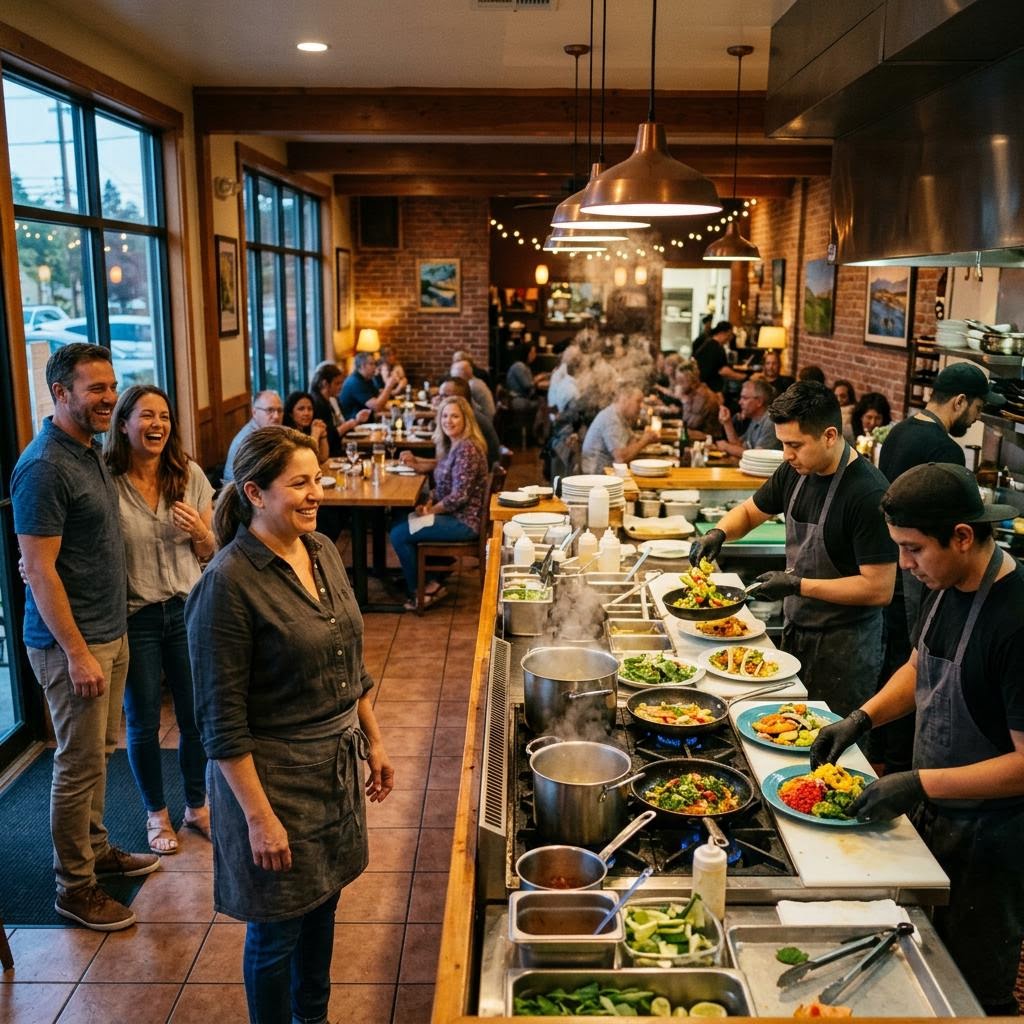
Operating a restaurant in the Lakeshore area of Newark, California, requires a unique blend of culinary skill, hospitality, and rigorous financial management. Exploring this part of the city means evaluating potential opportunities and constraints for food service entrepreneurs. Anticipated foot traffic patterns, desired local customer demographics, and the specific physical capabilities of any property you consider will dictate how your restaurant must operate to remain profitable.
Whether you are launching a new dining concept, taking over an existing lease, or expanding your current cafe to accommodate more guests, understanding the intersection of your physical location and your capital needs is the foundation of long-term stability. Funding conversations for Lakeshore restaurateurs are not just about securing money; they are about securing the right kind of money that aligns with the predictable—and unpredictable—rhythms of the food and beverage industry.
The Lakeshore Restaurant Landscape
When researching Lakeshore as a potential environment within Newark, owners must verify how a specific site blends community access with commercial presence. Does the location allow a restaurateur to effectively serve a mix of local residents and professionals seeking dining options? Assessing this potential customer base and verifying local zoning or parking allowances is critical when planning your menu, your operating hours, and ultimately, your financial projections.
However, the costs associated with establishing or maintaining a restaurant in this specific area can be substantial. Rent, utility structures, and local permitting all factor into your baseline overhead. Before seeking capital, it is essential to map out these fixed costs against your projected revenue. A loan should not be used to indefinitely float an unprofitable operation; rather, it should act as a bridge to profitability or a catalyst for planned growth.
When you approach a funding conversation, being able to articulate how your business fits into the Lakeshore ecosystem demonstrates operational maturity. It shows that you are not just a cook or a host, but a capable business owner who understands their market.
Structuring Capital for Food Service
In the restaurant industry, the margin for error is notoriously slim. Cash flow can fluctuate wildly based on seasonality, local events, or even changes in consumer dining habits. Therefore, the type of capital you seek must reflect the purpose it will serve. Mismatching the loan type to the business need is one of the most common missteps food service operators make.
For instance, taking a short-term, high-interest working capital advance to pay for a long-term asset like a commercial oven can put immense pressure on your daily cash flow. Conversely, seeking a traditional multi-year term loan to cover a temporary dip in seasonal revenue might leave you paying interest long after the season has passed.
Lakeshore restaurant owners must categorize their needs distinctly: working capital for operations, equipment financing for physical assets, and potentially commercial real estate loans if the strategy involves purchasing the building rather than leasing.
Equipment and Kitchen Upgrades
A restaurant is only as capable as its kitchen. In Newark, complying with health and safety standards while maintaining efficient production often requires significant investment in commercial-grade equipment. Ovens, refrigeration units, ventilation systems, and specialized prep stations are expensive, but they are also essential assets.
When exploring capital for these items, equipment financing is often the most practical route. In this structure, the equipment itself generally serves as the collateral for the loan. This can make approval more accessible and help preserve your working capital for day-to-day operations like payroll and inventory.
- Assess the lifespan of the equipment against the loan term.
- Factor in installation and maintenance costs, not just the purchase price.
- Compare the benefits of leasing versus buying based on how quickly the technology becomes obsolete.
Managing Seasonal Cash Flow and Inventory
Even in a stable area like Lakeshore, dining volume is not perfectly linear. There will be peak seasons, holiday rushes, and slower periods. Your cash flow must be robust enough to carry the business through the dips without compromising the quality of your ingredients or the reliability of your staff.
Working capital loans or lines of credit are specifically designed to address these gaps. They provide the liquidity needed to order inventory ahead of a busy season or to manage payroll during a temporary lull. The key is to use working capital proactively rather than reactively. If you are constantly seeking short-term cash to cover last week's bills, the underlying business model may need adjustment.
By analyzing your historical sales data, you can anticipate when cash will be tight and arrange for a line of credit before the pressure mounts. This proactive approach not only reduces stress but also puts you in a stronger negotiating position.
Expansion and Commercial Real Estate
For successful Lakeshore restaurateurs, the next logical step is often expansion. This might mean expanding the current footprint, opening a second location elsewhere in Newark, or transitioning from leasing a space to purchasing the property. Commercial real estate (CRE) loans and certain SBA loan programs (like the SBA 504) are tailored for these major moves.
Purchasing your location stabilizes your long-term occupancy costs and builds equity. However, the upfront capital requirement is significant, and the approval process is rigorous. Lenders will closely examine your historical profitability, debt service coverage ratio, and the overall health of the restaurant.
- Ensure your financial records are pristine, with clear profit and loss statements.
- Prepare a detailed business plan outlining how the expansion will increase revenue without disproportionately increasing costs.
- Understand the timeline; CRE and SBA loans require patience and thorough documentation.
Preparation Steps Before the Conversation
Walking into a funding discussion unprepared is a disservice to your business. Lenders and capital providers want to see that you have a firm grip on your numbers. In the food service industry, where failure rates are high, demonstrating financial literacy is just as important as having a great menu.
Before discussing loan amounts or terms, organize your financial house. Have your tax returns, balance sheets, and cash flow statements ready. Be prepared to explain any anomalies in your revenue history. If there was a dip in sales, articulate why it happened and how you responded.
Most importantly, have a clear, quantified 'Use of Funds' statement. If you are asking for $100,000, know exactly where every dollar is going and how that investment will generate a return. Vague requests for 'growth capital' are far less compelling than a detailed breakdown of a kitchen remodel that will increase table turn times by fifteen percent.
Making a Responsible Decision
Securing funding is a milestone, but the true measure of success is the ability to easily manage the repayment while growing the business. For Lakeshore restaurateurs, this means ensuring that the new debt service does not suffocate the restaurant's operational cash flow.
Take the time to model the proposed loan payments against your most conservative revenue projections. If the numbers only work in a best-case scenario, the financing structure is likely too aggressive. Funding should feel like a carefully calculated tool for growth, not a gamble.
By approaching the process systematically—understanding your exact needs, organizing your financials, and selecting the loan type that matches your project—you can position your Lakeshore restaurant for sustained success in Newark’s dynamic food scene.