
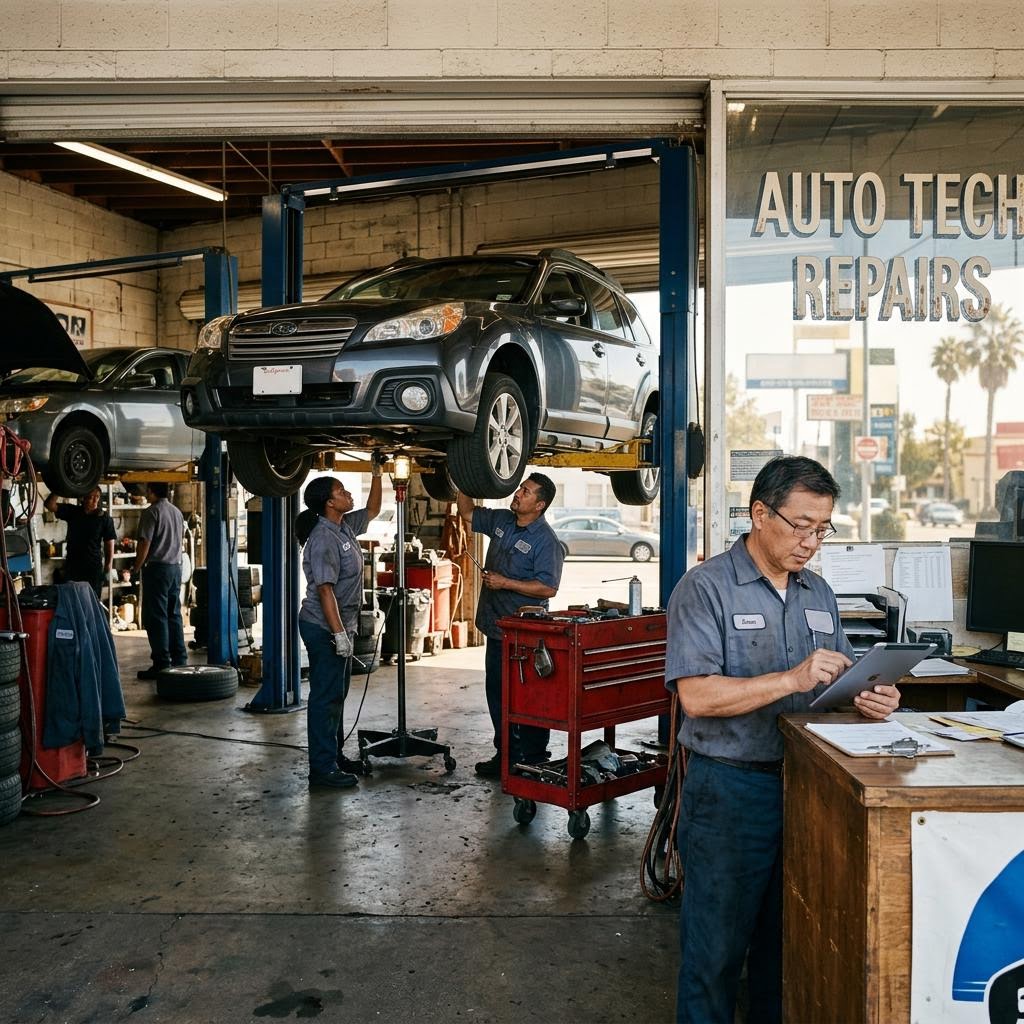
The automotive repair and service industry in Newark, California, is built on a foundation of technical expertise, customer trust, and speed. Whether operating a general repair shop, a specialized transmission center, or a high-volume tire and alignment franchise, automotive business owners must constantly balance the demands of modern vehicle technology with the immediate needs of their local customers. When a customer's vehicle breaks down, they expect rapid, reliable service. Delivering that service requires a fully functional shop, readily available parts, and highly trained technicians.
Financially, this creates a volatile environment. The cost of maintaining an automotive facility in Newark is significant, and the sudden failure of a critical piece of shop equipment—like a heavy-duty lift or an advanced diagnostic scanner—can immediately halt production and cost the business thousands of dollars in lost revenue per day. When these crises occur, traditional bank loans are often too slow to solve the problem. In these highly specific, urgent scenarios, some automotive businesses turn to a Merchant Cash Advance (MCA) for rapid liquidity.
Automotive-Specific Capital Pressures in Newark
Automotive shops in Newark face a unique blend of capital pressures. Unlike professional service firms with low overhead, an auto shop requires a massive physical footprint, expensive machinery, and a constant flow of physical inventory (parts, fluids, tires). When a vehicle is on the lift, the clock is ticking. If a technician cannot complete a repair because a specialized tool broke or a bulk order of necessary parts was delayed due to cash flow constraints, the bay is blocked. A blocked bay means zero revenue is being generated in that space.
Furthermore, the majority of retail automotive repair revenue is captured via credit card transactions at the point of sale. While this provides immediate cash flow, it also means the business is highly susceptible to daily fluctuations in customer volume. If a severe weather event or local economic dip suppresses traffic for a week, the shop's cash reserves can drop dangerously low, right as payroll or commercial rent comes due.
How a Merchant Cash Advance Generally Works
It is crucial for Newark business owners to understand that a Merchant Cash Advance is not a traditional loan; it is a commercial transaction. In an MCA, a financial provider purchases a portion of the shop's future revenue at a discount. The provider delivers an upfront lump sum of cash to the business immediately—often relatively quickly.
In exchange, the automotive shop agrees to remit a fixed percentage of its daily credit card sales or total daily bank deposits to the provider. This daily sweep continues until the original advance amount, plus a predetermined fee known as the 'factor rate,' is fully collected.
Because the repayment is tied directly to daily sales volume, the dollar amount paid each day fluctuates. If the shop has a record-breaking week of repairs, the MCA provider collects a larger dollar amount, paying the advance off faster. If it snows and no one brings their car in, the daily collection is smaller. This flexible collection structure, combined with the extreme speed of funding, makes the MCA highly accessible for businesses with strong daily card volume but perhaps lower credit scores.
Uses of Funds and Urgent Scenarios
Because an MCA is one of the most expensive forms of commercial capital available, it should never be used for long-term investments, such as buying the shop’s real estate or undertaking a massive facility expansion. An MCA is a tactical tool designed for speed.
In the automotive industry, an MCA is typically deployed to solve an immediate crisis that threatens revenue, or to capture a fleeting, highly lucrative opportunity.
- Replacing a catastrophic failure of critical shop equipment, such as an alignment rack or a heavy-duty hydraulic lift.
- Purchasing a massive bulk order of high-turnover inventory (e.g., tires, brake pads, oil) at a steep supplier discount that expires immediately.
- Bridging a sudden, unexpected gap in payroll during an anomalously slow month to retain highly specialized technicians.
A Newark, California Automotive Scenario
To visualize how this functions, consider a hypothetical scenario involving a busy, independent tire and alignment shop in Newark, California. It is mid-October, and the shop is anticipating the seasonal rush of customers preparing their vehicles for winter driving. Suddenly, the shop's primary tire mounting and balancing machine suffers a catastrophic motor failure. It cannot be repaired; it must be replaced.
The cost of a new, commercial-grade machine is $15,000. Without it, the shop cannot perform its core service and will lose dozens of customers daily to competitors. The owner does not have the liquid cash available and knows that a traditional bank equipment loan will take two to three weeks to underwrite and fund. The owner cannot afford to lose three weeks of peak seasonal revenue.
Instead, the owner applies for a Merchant Cash Advance. The provider reviews the shop's strong daily credit card processing history and may approve an advance quickly. The shop buys the machine, installs it immediately, and captures the seasonal rush. Over the next several months, the MCA provider deducts a fixed percentage of the shop’s daily credit card sales until the advance and the factor fee are paid. The owner calculated that the high cost of the MCA was easily offset by the revenue saved by not having the bays sit empty. (Note: This is an illustrative example meant to explain the mechanics of an MCA. Actual factor rates and terms vary widely and must be carefully calculated by the owner.)
Qualification and Documentation Preparation
The underwriting process for an MCA is drastically different from a conventional loan. Because the provider is purchasing future sales, their primary concern is the consistency and volume of the shop's current cash flow, rather than historical tax returns or pristine personal credit scores.
Newark automotive owners must provide the last several months of business bank statements and merchant processing (credit card) statements. The provider will analyze these to ensure the shop processes enough daily volume to support the daily sweep without collapsing. A voided check and a copy of the owner's driver's license are usually all that is required to facilitate rapid funding.
Cash-Flow and Payment Considerations (Tradeoffs)
The speed and accessibility of an MCA come at a severe premium. MCAs do not use an Annual Percentage Rate (APR); they use a factor rate. Because the total repayment amount is fixed and typically collected over an unpredictable but often short window, the effective annualized interest rate can be exceptionally high.
The most critical tradeoff is the relentless impact on daily operating liquidity. The MCA provider sweeps their percentage of sales before the shop owner can pay for parts, payroll, or rent. If a Newark shop operates on thin net margins, giving up a portion of daily gross sales to an MCA can rapidly starve the business of the cash it needs to operate. Furthermore, paying an MCA off early rarely saves the business money; the total payback amount is fixed regardless of speed.
Comparison Questions and Responsible Next Steps
Because MCAs are generally unregulated compared to traditional banking products, Newark automotive owners must scrutinize the agreements with extreme caution. Ask the provider directly: What is the exact total dollar amount that must be repaid? What specific percentage of daily sales will be withheld? How exactly is the daily collection processed (e.g., split processing at the credit card terminal, or an ACH sweep from the bank account)? Is there a reconciliation clause if revenue plummets?
An MCA is not universally appropriate and should never be the first option for financing. However, when deployed strategically to solve an urgent crisis where the cost of inaction exceeds the cost of the advance, it can be a vital tool. By carefully comparing alternatives and analyzing the exact daily cash flow impact, Newark automotive owners can protect their businesses and keep their bays turning.