
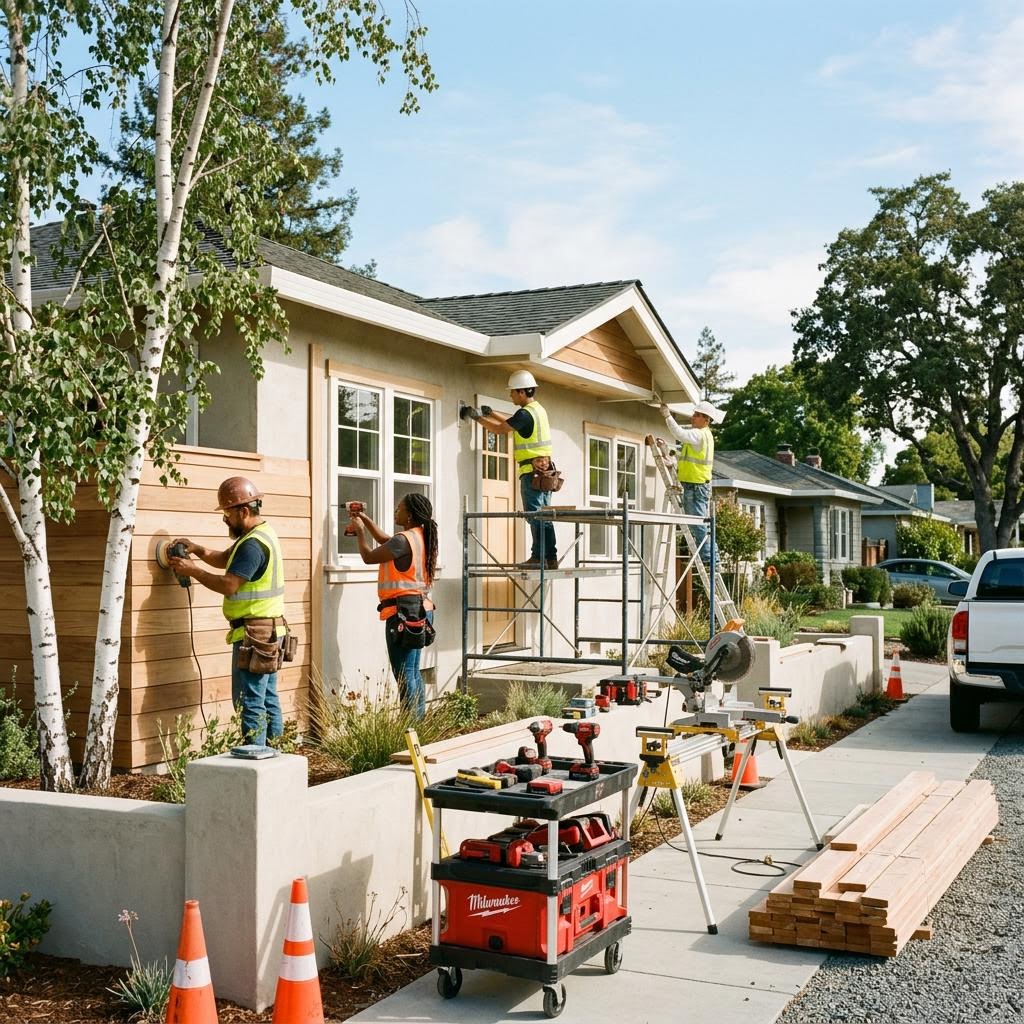
Operating as a contractor or tradesperson in the Birch Grove area of Newark, California, requires managing a highly dynamic financial environment. The business of building, repairing, and maintaining infrastructure is inherently project-based. Unlike retail or personal services with relatively predictable daily transactions, the revenue for trades and contractors arrives in distinct, often irregular chunks. Meanwhile, the expenses—payroll, materials, insurance, and equipment maintenance—demand consistent, scheduled capital outlays.
Whether you are an electrical contractor taking on commercial build-outs, a plumbing company serving residential neighborhoods, or a general contractor managing large-scale renovations, the flow of your cash defines the health of your business. Navigating the lag between paying your crews and receiving your final progress payment is a structural challenge that almost every successful trade business must solve. Securing the right business loan or line of credit is often the key to moving from surviving project-to-project to intentionally scaling your operations.
The Birch Grove Contracting Landscape
When considering the Birch Grove area as an operational base for trades businesses, owners should carefully verify logistical advantages. Does a particular site offer convenient access to Newark’s residential zones and commercial corridors? Contractors must determine if a property can be permitted and utilized as an efficient staging ground for fleets deploying across the East Bay. Maintaining a compliant facility, yard, or staging area anywhere in Newark requires capital. The broader construction environment is highly competitive, and the businesses that win the best bids are those with the financial stability to execute them without interruption.
For local contractors, capital constraints can directly limit revenue. If you do not have the liquidity to purchase materials upfront or carry payroll for the first 45 days of a new job, you cannot bid on larger, more profitable contracts. This creates a ceiling on your growth.
When entering a funding discussion, it is critical to frame your request around this specific dynamic. Lenders need to understand that in the trades, capital is not just a safety net; it is a primary tool for revenue generation. Your ability to articulate how a line of credit translates directly into the capacity to take on more work will significantly strengthen your funding profile.
Managing Project-Based Cash Flow
The standard payment structure in construction and contracting—involving upfront deposits, progress billing, and retainage—is notoriously hard on cash flow. You are often required to pay for materials upon delivery and pay your workers weekly, yet you may wait 30, 60, or even 90 days for an invoice to clear. If a project is delayed due to weather, permitting, or supply chain issues, that payment timeline stretches even further.
A revolving line of credit is widely considered the most effective tool for managing this project-based cash flow gap. A line of credit allows you to draw funds exactly when you need them to cover payroll or material costs, and then pay down the balance as soon as the client settles their invoice. This flexibility prevents you from paying interest on a large lump sum that you don't immediately need.
Another option some contractors explore is invoice factoring or accounts receivable financing. While these can provide immediate liquidity by advancing cash against outstanding invoices, they can be more expensive. It is crucial to weigh the cost of the capital against the profit margin of the project to ensure you are not working simply to pay the lender.
Equipment Financing for Heavy Machinery
The trades are equipment-intensive. From fleets of specialized service vehicles to heavy machinery, diagnostic tools, and staging equipment, the assets required to do the job are expensive. Relying on outdated or unreliable equipment can lead to project delays, safety hazards, and lost contracts.
Equipment financing is uniquely suited for contractors looking to upgrade or expand their capabilities. In these arrangements, the equipment itself serves as the collateral for the loan, which often makes approval more straightforward and preserves your working capital for operational expenses.
- Match the loan term to the expected useful life of the equipment; avoid financing a tool over five years if it will need replacing in three.
- Factor in the total cost of ownership, including insurance, maintenance, and storage space in your Birch Grove facility.
- Consider leasing versus purchasing for equipment that changes rapidly with technological advancements.
Navigating Seasonal and Economic Cycles
Construction and contracting are subject to both seasonal shifts and broader economic cycles. Residential remodeling might surge in the spring and summer, while commercial maintenance contracts might follow a different timeline. Preparing for the slower seasons is a hallmark of a mature trades business.
During peak seasons, the focus is on execution and cash flow management. During slower periods, the focus shifts to maintaining core staff and covering fixed overhead. Securing a working capital loan or expanding a line of credit should ideally happen during your strongest months. Lenders evaluate your application based on recent performance, so applying when your balance sheet looks robust puts you in a much better negotiating position.
Taking on short-term, high-interest debt out of desperation during a slow month can severely damage the profitability of your upcoming busy season. Proactive financial planning is your strongest defense against the cyclical nature of the industry.
Commercial Real Estate and Yard Expansion
As a contracting business grows, the need for physical space grows with it. Storing materials securely, parking a growing fleet of vehicles, and maintaining a professional office for administrative staff requires a dedicated facility. In the Birch Grove area, transitioning from leasing a small yard to purchasing a commercial industrial space is a major financial milestone.
Commercial real estate loans and SBA 504 loans are the primary vehicles for this type of expansion. Purchasing your facility stabilizes your long-term overhead and builds equity for the business.
- Evaluate your historical cash flow to ensure the business can comfortably service a commercial mortgage during both peak and slow seasons.
- Understand the environmental and zoning requirements specific to contracting yards in Newark.
- Prepare for the extended timeline of commercial real estate transactions, ensuring your current lease agreements provide enough runway.
Organizing Financials for Lenders
Contractors often struggle in funding conversations not because they lack revenue, but because their financial reporting is disorganized. Lenders want to see a clear distinction between project accounting and overall business operations.
To present a strong case, utilize a Work-in-Progress (WIP) schedule. This document shows the status, billing, and costs associated with every active project. It demonstrates to a lender that you have a firm grip on your margins and are not using the deposit from Project B to finish Project A.
In addition to standard tax returns and balance sheets, clearly separate your accounts receivable by aging. Showing that your clients reliably pay, even if they take 60 days, builds confidence in your business model.
A Foundation for Growth in Birch Grove
For trades and contractors in the Birch Grove area, securing business funding is about building capacity. The right financial structure empowers you to bid confidently, hire the best crews, and execute projects without the constant stress of an overdrawn operating account.
By clearly identifying whether you need a revolving line for project cash flow, equipment financing for new assets, or a term loan for facility expansion, you can pursue capital with intention. Avoid generic funding solutions and seek out structures that respect the specific rhythms of the construction industry.
With organized financials and a proactive approach to borrowing, your contracting business can establish a resilient, profitable foundation in Newark’s competitive landscape.