
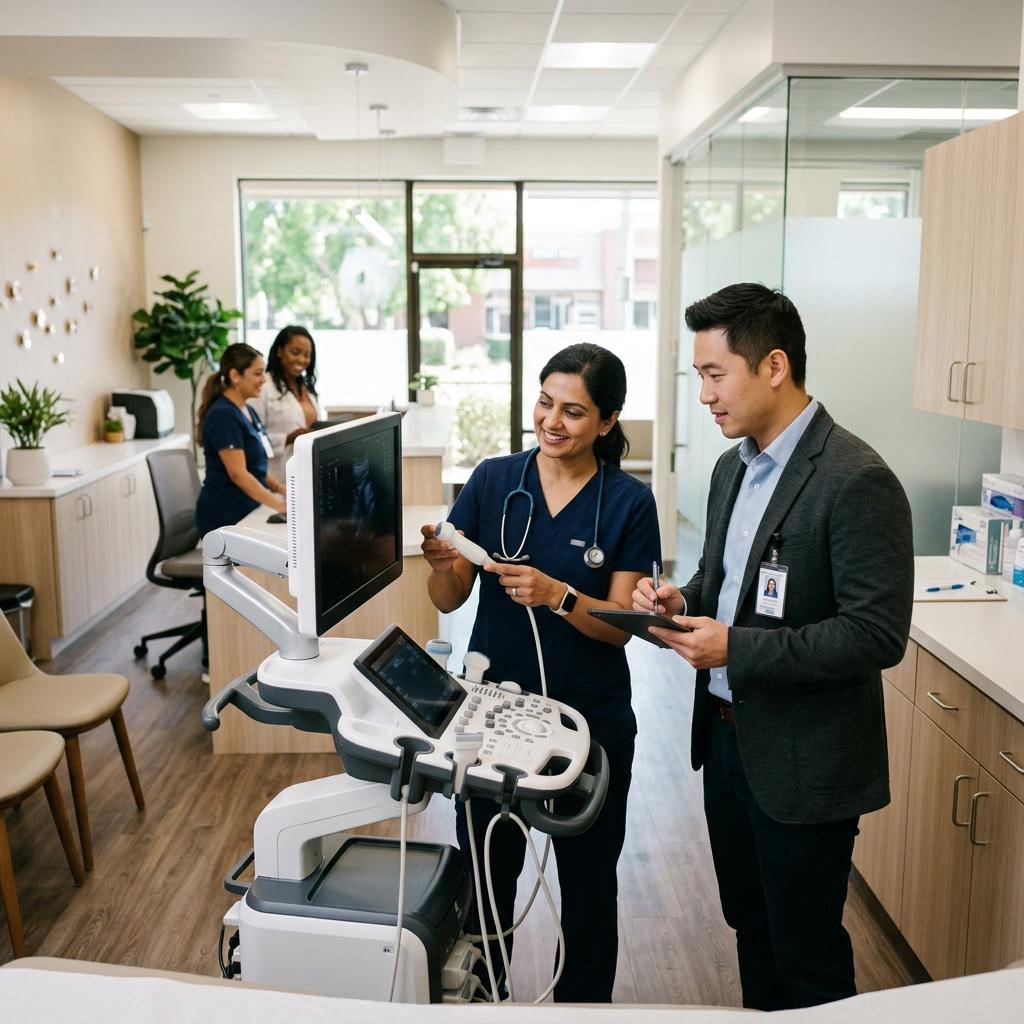
Operating a medical or healthcare practice in Newark, California, requires a commitment not only to exceptional patient care but also to rigorous financial and operational management. The healthcare landscape is constantly evolving, driven by advancements in medical technology, stringent compliance regulations, and shifting patient expectations. For practice owners in Newark, California—whether managing a dental clinic, a specialized physical therapy center, or a comprehensive family medicine practice—maintaining a state-of-the-art facility is often a non-negotiable requirement for retaining patients and attracting top-tier clinical talent.
However, clinical excellence comes at a significant financial cost. The machinery, diagnostic tools, and specialized healthcare IT infrastructure required to run a modern practice represent massive capital expenditures. Finding the most efficient way to fund these acquisitions without jeopardizing the clinic’s daily operating liquidity is a continuous challenge. This is where equipment financing becomes a highly strategic tool for the medical and healthcare industry.
Healthcare-Specific Capital Pressures in Newark
Healthcare providers in Newark, California operate under unique financial pressures that differ substantially from traditional retail or manufacturing businesses. One of the most glaring challenges is the structural delay in revenue realization. Medical practices often wait weeks or months for insurance reimbursements to clear, creating a persistent gap in cash flow. During this waiting period, fixed costs—such as commercial rent, clinical payroll, malpractice insurance, and medical supplies—must still be paid on a strict monthly schedule.
When you layer the cost of high-end medical equipment on top of these existing cash flow gaps, the financial strain can become severe. If a practice uses its liquid cash reserves to purchase a $75,000 digital X-ray machine outright, it risks starvation if a major insurance payer delays a batch of reimbursements the following month. Consequently, practice owners must carefully evaluate their local market position in Newark, assessing whether their patient volume can support debt service on new equipment without squeezing their operational buffer.
How Medical Equipment Financing Works
Equipment financing is a specialized form of commercial borrowing designed specifically for the acquisition of physical business assets. In this structure, the medical equipment being purchased serves as the primary collateral for the loan. Because the lender holds a secured interest in a valuable, tangible asset, they are often able to offer more accessible approval terms and competitive interest rates compared to unsecured working capital loans.
Typically, a lender will cover a large percentage of the equipment's purchase price—a significant portion of the purchase price for qualifying practices with strong credit profiles. The practice repays the principal and interest over a fixed term, over a set timeframe, depending on the expected useful life of the technology. Once the loan is fully amortized, the practice owns the equipment outright, free and clear of any liens.
This arrangement allows Newark healthcare providers to acquire revenue-generating or efficiency-driving technology immediately while spreading the cost over the lifespan of the asset, matching the expense to the revenue the equipment produces.
Common Uses of Funds in Healthcare
The scope of what can be financed under an equipment loan in the healthcare sector is broad. It is not limited to heavy imaging machinery. In a modern Newark, California practice, equipment financing is frequently deployed for a wide array of clinical and operational upgrades.
Dental practices utilize these loans for specialized operatory chairs, 3D imaging systems, and sterilization centers. Physical therapy clinics finance specialized rehabilitation machines and diagnostic treadmills. General practitioners often finance point-of-care laboratory equipment and advanced Electronic Health Record (EHR) server systems, which, while digital, are often bundled as capital equipment due to their high upfront hardware costs.
- Diagnostic imaging equipment, including MRI, CT, X-ray, and ultrasound machines.
- Surgical and procedural tools tailored to specialized outpatient clinics.
- Healthcare IT infrastructure, including secure servers and patient management hardware.
- Clinical outfitting, such as specialized examination tables, lighting, and sterilization units.
A Newark, California Healthcare Scenario
To illustrate how this financing might be deployed, consider a hypothetical scenario involving an established, multi-provider dental practice in Newark, California. The practice has a loyal patient base but is losing lucrative restorative dentistry cases to a competitor because they lack an in-house cone beam computed tomography (CBCT) scanner, forcing them to refer patients out for complex imaging.
The practice owners want to purchase a state-of-the-art CBCT machine, which costs approximately $90,000 including installation. However, paying cash would deplete their reserve account, leaving them vulnerable to any sudden drops in insurance reimbursements. Instead, they apply for medical equipment financing through a commercial lender.
The lender reviews their consistent historical revenue and may approve an equipment loan covering a significant portion of the purchase and installation costs. The practice pays a fixed monthly installment. Almost immediately, they begin performing complex restorative procedures in-house. The revenue generated from retaining these cases is intended to cover the monthly loan payment, effectively allowing the machine to pay for itself while increasing the overall profitability of the Newark practice. (Note: This is an illustrative example meant to explain the mechanics of equipment financing. Actual approval, rates, and terms depend entirely on lender underwriting guidelines and the borrower’s financial profile.)
Qualification and Documentation Preparation
Because the loan is secured by the medical equipment, the underwriting process is typically faster and more streamlined than a commercial real estate or SBA loan. However, lenders still require a clear picture of the practice's financial health to ensure the business can comfortably manage the new debt service.
Practice owners in Newark should be prepared to provide recent corporate tax returns, year-to-date Profit and Loss statements, and a current Balance Sheet. Additionally, lenders will request a detailed invoice or quote from the equipment vendor, which must specify the make, model, and total cost of the asset, including soft costs like delivery and installation.
Cash-Flow and Payment Considerations
The most significant benefit of equipment financing is the preservation of working capital. By avoiding a massive upfront cash expenditure, the practice maintains the liquidity necessary to manage payroll and inventory gaps. The fixed monthly payments also make long-term budgeting highly predictable.
However, there are important tradeoffs. The practice is committing to a fixed liability for the duration of the term, regardless of whether patient volume fluctuates. Furthermore, technology in the medical field evolves rapidly. If a practice finances a piece of equipment over seven years, but the technology becomes obsolete in four, the business is stuck paying for an outdated asset. Owners must carefully match the term of the loan to the realistic, productive lifespan of the equipment.
Comparison Questions and Responsible Next Steps
Before finalizing an equipment financing agreement, Newark healthcare providers should ask targeted questions to ensure the loan structure aligns with their operational reality. Ask the lender: What percentage of 'soft costs' (installation, training, software) can be rolled into the total loan amount? Is there a prepayment penalty if the practice chooses to pay off the equipment early? Will the lender place a lien only on the specific equipment, or do they require a blanket lien on the entire practice?
By thoroughly vetting these questions and taking a calculated, ROI-driven approach to technology acquisitions, medical and healthcare professionals in Newark, California, can build resilient, cutting-edge practices that serve the community for years to come.